Shopee vs. Shopify vs. Lazada vs. Taobao: Full Comparison and Reviews 2025
Shopee vs. Shopify vs. Lazada vs. Taobao: Overview
【Cashback from Extrabux】Up to 11.2% cashback
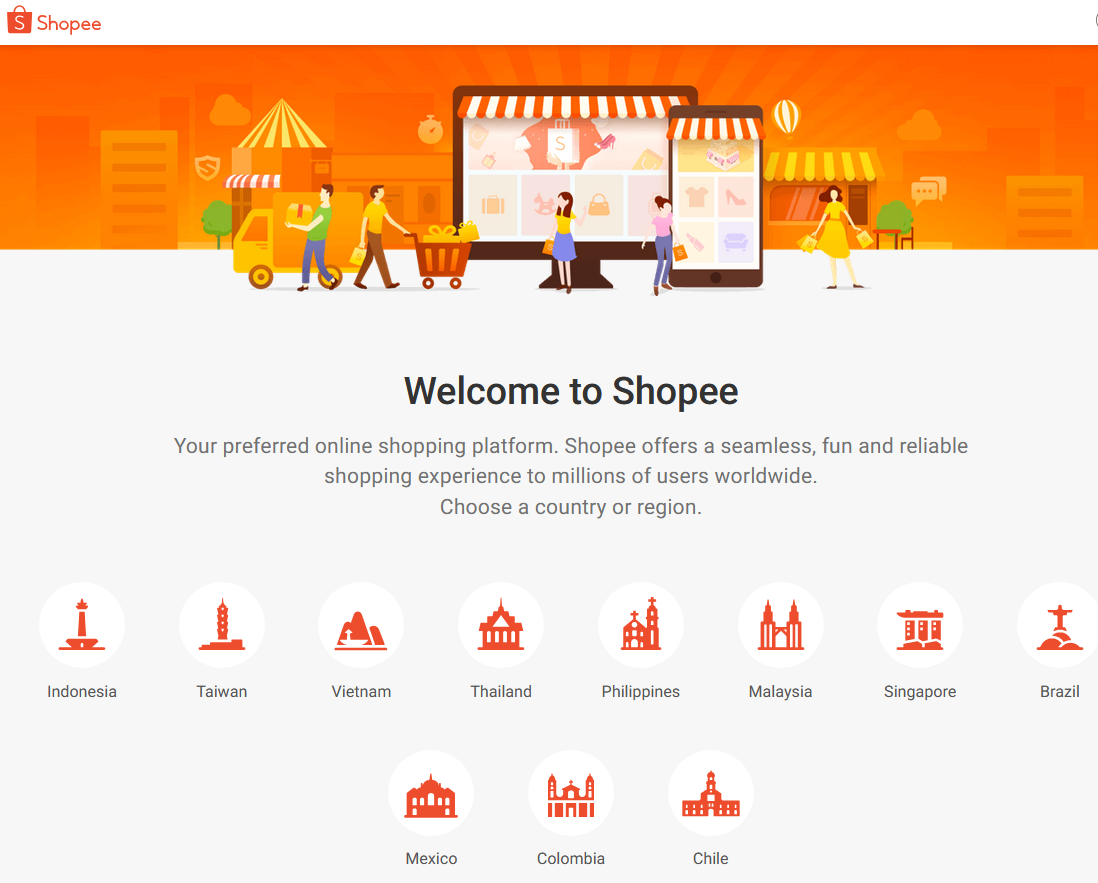
Shopee is a leading consumer-to-consumer (C2C) and business-to-consumer (B2C) e-commerce marketplace headquartered in Singapore. It is a dominant force in Southeast Asia and Taiwan, with a strong presence in countries like Indonesia, Malaysia, Thailand, Vietnam, the Philippines, and Brazil. Its core model is being a marketplace: Shopee provides a digital platform where individual sellers and businesses can list their products to reach millions of active users on the Shopee app and website. It's free to list products and open a storefor Sellers. Shopee only makes money when you make a sale (through commissions and payment fees). This makes it easy for individuals and small businesses to start selling with minimal risk.
Shopee was built primarily as a mobile app. Its entire interface and user experience are designed for smartphones. The Shopee app is designed for engagement. It's not just a shopping list; it's a destination. Features like "Shopee Games" (where users earn coins and vouchers for simple games), "Shake It" (shaking your phone for rewards), and daily check-ins keep users coming back daily. Shopee is also famous for its massive, themed sales campaigns throughout the year (e.g., 3.3, 9.9, 11.11, 12.12). These events feature huge discounts, free shipping vouchers, and site-wide promotions that drive enormous traffic and sales volume.
For Individual Sellers on Shopee
You download the Seller app, register with your ID, and can start listing products almost immediately.
Fees:
Commission Fee: This is a percentage of the item's sale price (excluding shipping). It varies by product category and country but typically ranges from 1% to 5%. For example, fashion might be 5%, while electronics might be 2%.
Payment Processing Fee: Usually around 2.24% (varies by region) for every successful transaction.
Listing Fees: Free. You only pay when you make a sale.
Pros:
Massive Ready-Made Audience: You get instant access to Shopee's millions of daily users. You don't need to build your own website traffic from scratch.
Low Barrier to Entry: Setting up a store is free. You only pay a commission fee (a small percentage) once an item sells. There are no listing fees or monthly subscriptions for the basic plan.
Built-In Tools: Shopee provides sellers with a full suite of tools: logistics (SLS), payment processing, advertising platforms (Shopee Ads), and data analytics—all in one place.
Marketing Support: Shopee's large-scale marketing campaigns (like 9.9) drive traffic to the platform, and sellers can ride this wave to get more visibility.
Cons:
Fierce Competition: You are competing with thousands of other sellers, often selling identical products. This leads to price wars and very thin profit margins.
No Customer Ownership: You cannot easily extract customer data (like email addresses) to market to them directly outside of Shopee. Your customers are ultimately Shopee's customers.
Fees: While free to start, commissions, payment processing fees, and advertising costs can add up as you grow.
Dependence on Platform Rules: Your store is subject to Shopee's ever-changing policies, and your visibility depends on its algorithm.
For Buyers on Shopee
From cheap accessories to branded electronics, you can find almost anything.
Pros:
Extreme Variety: You can find almost anything, from cheap everyday items to branded electronics.
Competitive Prices: Due to high seller competition, prices are often very low, especially for generic goods.
Buyer Protection: The "Shopee Guarantee" system ensures you don't lose money if an item doesn't arrive or is not as described.
Deals and Entertainment: The constant vouchers, games, and sales events make shopping feel fun and rewarding.
User-Friendly: The app is designed to be intuitive and easy to navigate, even for first-time users.
Cons:
Product Quality Variance: As an open marketplace, product quality can be inconsistent. You must read reviews and check seller ratings carefully.
Counterfeit Goods: Like any large marketplace, fake or imitation products exist. Buyer vigilance is necessary.
Impulse Buying: The gamified, deal-heavy environment can encourage spending on things you don't necessarily need.
Saving Tip: Such a high amount of cash back comes from Extrabux (What is Extrabux?), it also offers coupon codes and recent promotions, and brings together 10,000+ sites (US, China, UK, Japan, Australia , Germany, France, Italy, etc.).
Just sign up for an Extrabux account and earn up to 80% cash back every time you place an order via the relevant link. Sign-Up Bonus: Join for FREE & Earn $20 Welcome Bonus today! Then earn $5 Friend Referral Bonus!
【Cashback from Extrabux】No cashback
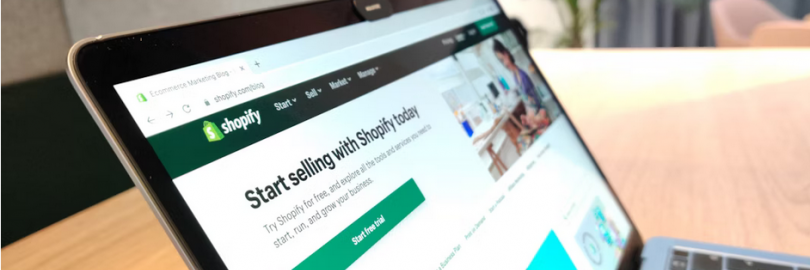
Shopify is a complete commerce platform that allows anyone to set up an online store and sell their products. Unlike Shopee or Lazada, it is not a marketplace. Instead, it's a Software-as-a-Service (SaaS) tool that provides you with the engine to build your own independent e-commerce website. The core of Shopify is that you create your own website with your own domain name (e.g., www.yourawesomebrand.com). This is your digital property. It gives you complete control over your brand, customer data, and customer experience, while handling all the technical complexity (hosting, security, updates) behind the scenes.
Shopify operates on a monthly subscription fee. Plans range from Basic (for individuals/small businesses) to Advanced (for scaling businesses) and Shopify Plus (for enterprises). Each tier offers more features and lower transaction fees. Unmatched App Ecosystem (Shopify App Store) is one of Shopify's biggest strengths. Thousands of third-party apps (both free and paid) can be integrated to add functionality like email marketing, loyalty programs, advanced analytics, and live chat. You can customize your store to fit your exact needs.
For Individual Sellers on Shopify
You choose a plan, pick a theme, add your products, and configure your settings. No coding knowledge is required to get started.
Pricing:
Basic Shopify: $29/month - Best for new businesses.
Shopify: $79/month - Best for growing businesses (includes professional reports).
Advanced Shopify: $299/month - Best for scaling businesses (advanced report builder, third-party shipping rates).
Shopify Plus: $2000+/month - Enterprise solution for high-volume merchants.
Fees:
Subscription Fee: The monthly fee for your plan.
Transaction Fees: If you use a payment provider other than Shopify Payments (their built-in processor), an additional fee (up to 2%) is charged per transaction.
Credit Card Rates: A fee is charged on every sale. This rate gets lower as you move to higher-tier plans.
Pros:
Complete Brand Control & Ownership: This is the #1 advantage. You build your own brand identity, and you own your customer data (email addresses, purchase history). This allows for direct email marketing and building a loyal community.
No Direct Competition on Your Page: Unlike a marketplace, your store page is only for your products. Customers aren't shown competing products from other sellers.
Scalability: Shopify grows with you. You can start small and scale to millions in revenue without needing to switch platforms. It handles high traffic volumes seamlessly.
Customization: Through themes and apps, you can create a truly unique shopping experience tailored to your products and audience.
Global Reach: You can sell to anyone, anywhere in the world, and easily set up different currencies and languages.
Cons:
You Drive the Traffic: The biggest challenge. Shopify provides the store, but you are responsible for bringing customers to it through your own marketing efforts (social media, SEO, content marketing, paid ads). This requires skill, time, and a marketing budget.
Monthly Cost: There is a recurring subscription fee, starting around $29/month (or less with a yearly plan), regardless of whether you make a sale. This is a fixed cost of doing business.
Steeper Learning Curve: While user-friendly, setting up a professional, high-converting store requires more initial work than listing a few items on a marketplace.
For Buyers (Shopping on a Shopify Store)
It's important to understand that a buyer does not "go to Shopify" to shop. They go to a specific brand's website that is powered by Shopify.
Pros:
Buyers are interacting directly with the brand they trust.
The checkout process is typically very smooth and secure
Cons:
There is no central "marketplace" to search for products across all Shopify stores.
You can only buy from the specific brand whose website you are on.
【Cashback from Extrabux】Up to 4.9% cashback
Founded in 2012, Lazada is a major e-commerce marketplace and a key leader in Southeast Asia, operating in countries like Indonesia, Malaysia, the Philippines, Singapore, Thailand, and Vietnam. It was acquired by Alibaba Group in 2016 and has since been heavily integrated with the Chinese giant's technology and resources. This is Lazada's single biggest advantage. Lazada offers a highly efficient fulfillment network, including cross-border shipping from China. Features like "Global Shipping" make it easy for international brands to reach SEA consumers.
Like Shopee, its core model is being a marketplace, connecting sellers
(both individuals and brands) with consumers. However, its identity and
focus have some distinct differences from its main competitor,
Shopee.While it has C2C sellers, Lazada has strategically positioned
itself as a platform for brands and authorized retailers (B2C -
Business-to-Consumer). You'll find more official brand stores and
flagship shops compared to Shopee, which has a stronger C2C
(Consumer-to-Consumer) vibe.
For Individual & Business Sellers on Lazada
There are local sellers(individuals or businesses selling within one country)and cross-border sellers (sellers, often from China, who ship directly to SEA countries). The process is straightforward through the "Lazada Seller Center." Verification for individual and business sellers is required.
Fees:
Commission Fee: Varies by product category, typically ranging from 1% to 4%. LazMall commissions are higher but offer greater visibility and prestige.
Payment Processing Fee: A fee (usually around 2-4%) is applied to each successful transaction.
Listing Fees: Free. No monthly subscription fees.
Pros:
Access to a Quality-Conscious Audience: Attracts buyers looking for branded and authentic products, often willing to pay a premium.
Superior Logistics Support: Especially strong for cross-border shipping, leveraging Alibaba's network.
High-Quality Platform & Tools: The Seller Center is robust, with good data analytics and support (Lazada University).
Brand Credibility: Having a store on Lazada can lend an air of legitimacy to a new brand.
Cons:
Generally Lower Traffic than Shopee: In most of its core markets, Lazada has fewer monthly active users and app downloads than its main competitor, Shopee.
Stricter Requirements for Brand Sellers: Getting onto LazMall involves a verification process and higher commission fees.
Less "Gamified" and Social: The platform can feel more transactional and less "fun" than Shopee, which might mean lower user engagement frequency.
Less Emphasis on C2C Tools: The platform's features and marketing are less tailored to casual, individual sellers compared to Shopee.
For Buyers on Lazada
Lazada offers a vast array of goods, from everyday necessities to premium brands. Shoppers often turn to Lazada, and specifically LazMall, for higher-ticket items like electronics, appliances, and authentic beauty products due to the trust in branded sellers. Lazada also offers frequent sales campaigns like 9.9, 11.11, and 12.12 major sales events, with deep discounts and site-wide vouchers.
Pros:
Trust and Authenticity: Due to its focus on brands and official retailers, buyers often perceive Lazada as a more trustworthy platform for purchasing authentic branded goods like electronics, cosmetics, and appliances.
Reliable Logistics: Lazada's control over its logistics network often translates to faster and more reliable delivery, especially for items fulfilled by Lazada itself.
Strong Buyer Protection: Like Shopee, it has a solid protection policy (Lazada Buyer Protection) that holds payment in escrow until the buyer confirms receipt of the correct item.
Cons:
Perceived Higher Prices: Because it hosts more official brands, prices can be slightly higher than on Shopee for similar or generic items. The focus is less on ultra-low-price C2C goods.
Less "Fun" or "Social": Compared to Shopee's highly gamified and social feed, Lazada can feel more straightforward and less entertaining for some users.
【Cashback from Extrabux】Up to 40% cashback
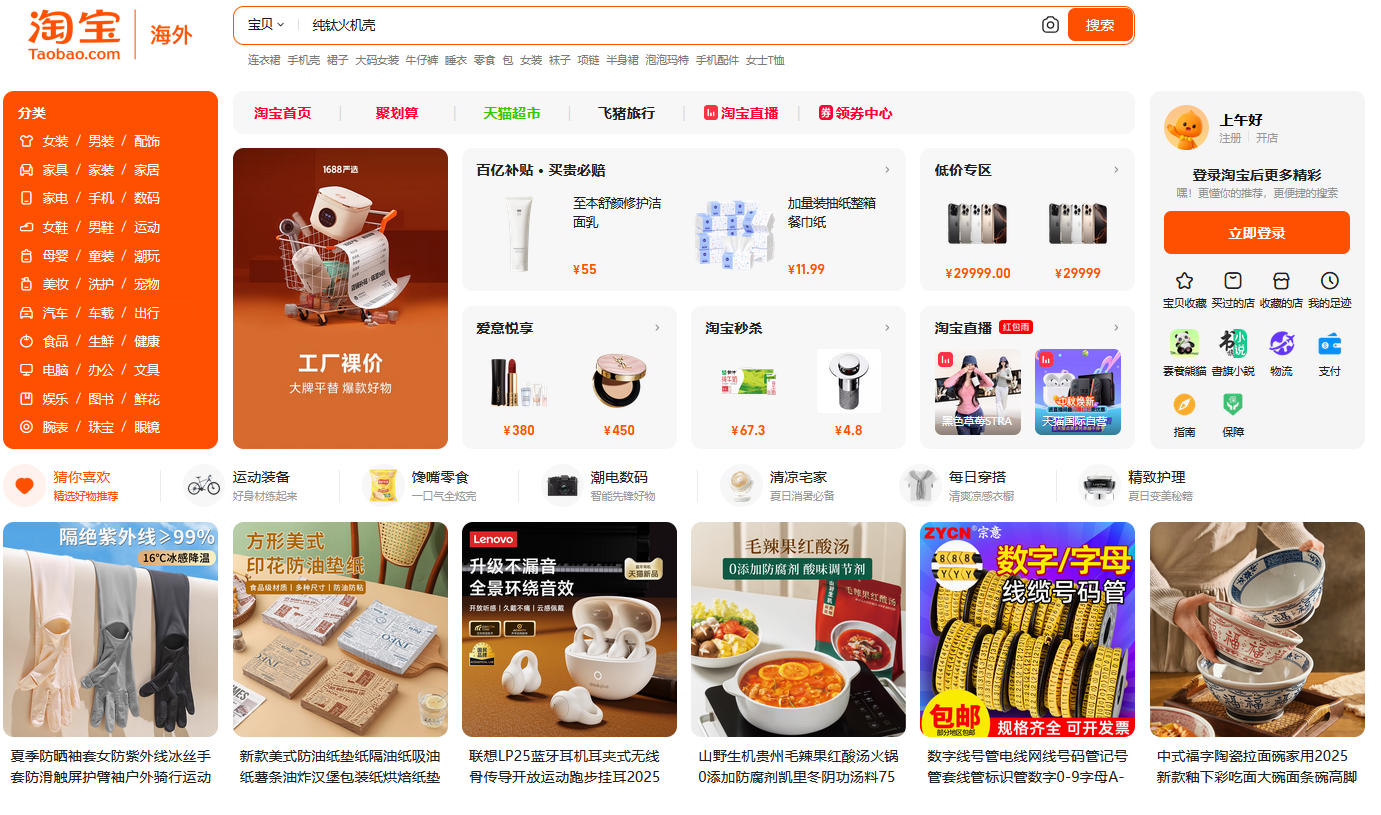
Taobao (淘寶, meaning "hunting for treasure") is a massive consumer-to-consumer (C2C) online marketplace owned by the Alibaba Group, meaning it primarily connects individual sellers and small businesses with buyers. It is the dominant e-commerce platform within Mainland China, renowned for its mind-boggling variety of goods and ultra-competitive prices. You can find literally anything on Taobao. From common household items to hyper-niche hobbyist parts, custom-made goods, and bizarre novelties, Taobao's inventory is immense. Many sellers on Taobao are the manufacturers or wholesalers themselves, allowing consumers to buy products at or near wholesale prices.
The platform is designed exclusively for the Chinese market. The interface, customer service, and logistics are all in Mandarin. This is the single biggest barrier for non-Chinese users.Taobao is also deeply integrated with social elements. Buyers can leave detailed reviews with photos and videos, ask questions publicly, and sellers are highly responsive. The platform also heavily features live streaming ("Taobao Live") where sellers showcase products in real-time. Plus, Taobao is seamlessly connected to Cainiao Network, Alibaba's logistics arm. This allows for incredibly fast, cheap, and reliable shipping within China.
For Individual Sellers on Taobao
Taobao is fundamentally designed for Chinese sellers selling to Chinese consumers.The entire seller center, customer service, and listing process are 100% in Mandarin. There is no official English support. To open a store, you typically need a Chinese business license or a Chinese citizen's ID card and a local bank account. It is exceptionally difficult, if not practically impossible, for an individual or business outside China to set up and operate a seller account on Taobao.
Pros:
Access to the Largest Consumer Market: You can sell to over a billion potential customers in China.
Low Setup Cost: Like other marketplaces, it's free to open a store. You pay fees only when you make a sale.
Powerful Ecosystem: You are plugged into Alibaba's complete ecosystem, including Alipay for payments and Cainiao for affordable, efficient logistics.
Cons:
Extremely High Competition: The market is saturated with sellers for almost every product category. Standing out is very difficult.
Geared Exclusively for Chinese Sellers: The registration process requires a Chinese bank account and a Chinese phone number, making it nearly impossible for individuals outside of China to sell.
Price-Sensitive Market: Chinese consumers are highly price-conscious, leading to intense price wars and very thin profit margins.
For Buyers on Taobao
International users interact with Taobao almost exclusively as buyers, and even this requires navigating significant hurdles.
Pros:
Unbeatable Selection and Price: This is Taobao's biggest draw. The variety is endless, and prices are often the lowest you can find anywhere because you are buying directly from the source (individuals, factories, wholesalers).
Unique and Customizable Items: It's a hub for unique fashion, accessories, home decor, and custom-made products that aren't available on Western platforms.
Direct from the Source: For many goods, especially electronics components or manufacturing samples, you are buying directly from manufacturers or distributors in China.
Cons:
Language Barrier: The entire platform is in Chinese.
Shipping Complexity: Most Taobao sellers only ship within Mainland China. International buyers typically must use a third-party "freight forwarder".
No International Customer Support: There is no support line for international buyers. Dispute resolution must be done in Chinese.
Counterfeit and Quality Risks: As an open marketplace, counterfeit goods and inconsistent quality are prevalent.
Shopee vs. Shopify vs. Lazada vs. Taobao: Full Comparison
The key difference lies in splitting them into two categories: Marketplaces and E-commerce Software.
Marketplaces (Shopee, Lazada, Taobao): You create a seller account on their platform to list products and reach their massive built-in audience. Think of it like setting up a stall in a giant, bustling digital mall.
E-commerce Software/Platform (Shopify): You use its tools to build your own independent online store (e.g., www.yourbrand.com). You are responsible for driving your own traffic through marketing. Think of it like building your own standalone retail shop. Shopify provides the tools but doesn't own your customer relationships.
At a Glance: Quick Comparison
| Feature | Shopee & Lazada | Taobao | Shopify |
| Type | Marketplace | Marketplace | E-commerce Software |
| Primary Region | Southeast Asia | China | Global (You choose your market) |
| Who owns the store? | You have a store within their app | You have a store within their app | You own your independent website |
| Who brings customers? | The marketplace has built-in traffic | The marketplace has massive built-in traffic | You must drive traffic (SEO, Social Media, Ads) |
| Fees | Commission per sale + payment fees | Commission per sale + complex fees | Monthly subscription + payment fees |
| Ease of Use | Very easy for beginners | Difficult for non- Chinese speakers | Steeper learning curve, but very powerful |
| Logistics | Integrated solutions (e.g., Shopee Express) | Integrated solutions within China | You choose and integrate your own carriers |
For Individual Sellers
This is where the differences are most critical.
| Feature | Shopee | Lazada | Taobao | Shopify |
| Best for | Beginners, hobbyists, or sellers targeting SEA. | Beginners, hobbyists, or sellers targeting SEA. | Sellers based in China targeting Chinese consumers | Entrepreneurs building a brand and business for the long term |
Primary Audience | Southeast Asia, Taiwan | Southeast Asia | Mainland China | Global (You drive traffic) |
Setup Complexity | Very Easy | Easy | Very Hard (Non-Chinese) | Medium (Tech skills help) |
| Upfront Cost | Very Low | Very Low | Low (but complex) | Subscription ($29+/mo) |
| Primary Fees | Commission + Payment Fee | Commission + Payment Fee | Commission | Subscription + Transaction |
| Brand Control | Limited | Limited | Very Limited | Complete |
Customer Data | Restricted | Restricted | Restricted | You own it all |
| Traffic Source | Built-in Marketplace | Built-in Marketplace | Built-in Marketplace | You create it (SEO, Ads) |
For Buyers
| Feature | Shopee | Lazada | Taobao | Shopify |
| Best for | Shoppers in Southeast Asia and Taiwan | Southeast Asia | Shoppers in China or those wanting direct access to Chinese goods | Buying from a specific, independent brand |
| Experience | Smooth, gamified, mobile-first | Smooth, brand- focused | Overwhelming, requires Chinese | Varies by individual store |
| Product Range | Wide variety | Wide variety | Unlimited variety | Brand-specific |
| Prices | Competitive | Competitive | Extremely Low | MSRP (Brand Value) |
| Shipping | Integrated (SPX), often free | Integrated, often free | Agent required (international) | Varies by store |
| Payment | Credit Card, e-Wallets, COD | Credit Card, e-Wallets, COD | Alipay (hard for int'l) | Credit Card, PayPal, etc. |
Shopee vs. Shopify vs. Lazada vs. Taobao: Which Platform is Right for You?
As an Individual Seller:
Choose Shopify if you are serious about building a long-term, recognizable brand. You want full control over your business, customer data, and profitability, and you are willing to invest time and money into marketing to drive traffic.
Taobao is exclusively for sellers based in China targeting the domestic Chinese market. It is not a feasible platform for individual sellers based elsewhere. If you are an international user, you should only consider Taobao as a sourcing platform for products to resell on your own Shopify store or other marketplaces.
Shopee and Lazada are direct competitors in
Southeast Asia. Shopee is often seen as more C2C-focused, social, and
gamified, while Lazada (owned by Alibaba) leans slightly more towards
B2C and official brand stores.
If you want to start selling quickly
to consumers in Southeast Asia or Taiwan and want access to a massive
built-in audience and are comfortable competing on price and promotions
in a fast-paced, mobile-centric environment, Shopee is a good choice.
If
you are a brand or larger seller targeting Southeast Asia and value
strong logistical support and a platform that feels slightly more
curated, Lazada is more suitbale for you.
In practice, most serious sellers in Southeast Asia list their products on both platforms to maximize their reach.
As a Buyer:
You don't "choose" Shopify to shop; you find a brand you like that happens to use Shopify to power its website.
Taobao is indispensable for Chinese consumers. For international shoppers, it's a powerful but complex tool primarily used by seasoned shoppers looking for specific items (like fashion replicas, manufacturing samples, or unique parts) at the lowest possible price, who are willing to navigate the language and shipping hurdles.
In Southeast Asia, use Shopee or Lazada. Lazada is a powerhouse of B2C e-commerce in Southeast Asia, leveraging its Alibaba backing to offer a reliable, brand-friendly platform. For buyers, it's a go-to for trustworthy purchases of branded goods.
Shopee is a powerhouse of social, mobile-first, and entertainment-driven e-commerce. For buyers in its regions, it offers an unbeatable combination of choice, deals, and security.
Taobao vs. Alibaba vs. Aliexpress vs. Temu: Keys Differences and Which is Right for You?
DHgate vs. Temu vs. Shein vs. AliExpress: Full Comparison and Reviews 2025
Extrabux is an international cashback shopping site, offering up to 30% cashback from 10,000+ Stores!
24S, SSENSE, MATCHESFASHION.COM, Shopbop, NET-A-PORTER, FARFETCH, YOOX, Eastbay, End Clothing, Macys, Neiman Marcus, Saks Fifth Avenue, Saks OFF 5TH, Bergdorf Goodman, Selfridges, Bloomingdales, Coggles, Harrods, Kohl's, Urban Outfitters, ASOS, Missguided, etc.
Join to get $20 welcome bonus now! (How does Welcome Bonus work?)

Recommendation
-

Where to Watch Chinese Short Dramas with English Subs: The Best Free and Paid Apps & Sites (2025)
-
Supreme LV Backpack Real vs. Fake Guide 2025: How Can I Tell If It Is Original?
-
U.S. Polo Assn. Cashback, Coupon Codes, and Savings Guide
-

The North Face vs. Columbia vs. Patagonia: Which is the Best Outdoor Gear Brand?
Up to 8% Cashback!
-

Chow Sang Sang Shopping Guide: Get Discounts & Cashback on Unique Holiday Gifts